Post-Visit Blues in a Long-Distance Relationship: The First 72 Hours
Why the goodbye after a long-distance visit hits so hard, and a plan for the first 72 hours apart: what to do alone, together, and what to avoid.
| When | On your own | Together | Try to avoid |
|---|---|---|---|
| Day 0: the goodbye and the trip home | Keep the evening easy: food you like, a shower, an early night. Leave the travel day free of other plans if you can. | Agree the date, or at least the month, of the next visit before you part. Send a message when the traveller arrives and have one short call that evening. | A long late call that turns into a replay of the goodbye while you are both tired. |
| Day 1: the first full day apart | Go back to one normal anchor: work, class, the gym, or a walk at your usual time. Unpack. | Start one small shared ritual, such as a photo from each of your days or a note timed for their morning. | Measuring the day against the visit, or expecting as much contact as when you were together. |
| Days 2 and 3: back to your own rhythm | See a friend or do something you put off during the visit. Sort the photos when you feel like it, not as a task. | Return to your usual call schedule. Put the next visit date where you both see it and pick one thing to plan for it. | Big decisions about the relationship while you still feel low. Give it a few days first. |
Why does it hurt more after a visit than before it?
Feeling flat, tearful, or restless after a long-distance visit is a common reaction to going from all-day closeness back to messages and calls. It usually eases as your normal routine returns. Three things help most in the first 72 hours: settle the date of the next visit before you part, start one small shared ritual on day one, and get back to your own rhythm.
During a visit, being together takes no effort. You share meals, errands, and silences without planning any of it. The day after, every bit of contact needs a message, a check of the time zone, or a scheduled call again, and that contrast is sharpest at first. The two of you may also feel it differently: the one who travels has the trip home to get through, while the one who stays goes back to rooms that still feel shared.
This guide is our own advice from the HeartSee team, not medical advice. HeartSee, the couples app that publishes this blog, comes up once below; the plan works with any app or none.
What should you do in the first 72 hours after saying goodbye?
Give each of the first three days one job. The table above sets them out: day 0 is for getting home and one short call, day 1 is for a normal anchor and a small shared ritual, and days 2 and 3 are for your own life and the next plan.
Most of the plan is about what you do on your own, not how much you talk. Long calls feel like the cure on the first evening, but when you are both tired they often turn into replaying the goodbye. A short call, sleep, and a normal morning usually do more.
- Before you part: agree on the next visit, even if it is only the month.
- Day 0: one message on arrival and one short call. Then rest.
- Day 1: one normal thing at your usual time, and one small ritual together.
- Days 2 and 3: see someone in person, then plan one thing for the next visit.
Related reading: First visit after long distance: a checklist for both of you
Should we plan the next visit before saying goodbye?
Yes, if you can. A goodbye with a date attached is a gap of known length; a goodbye without one feels open-ended, and that is often what makes the first days heavy. Do it on the last full day, with both calendars open, not at the gate.
If exact dates are not possible yet, agree the month and the day you will decide by. Once the date is firm, put it somewhere you both see it. A countdown helps when it counts down to a confirmed date; counting down to a maybe tends to make things worse when plans move.
Related reading: Free countdown to your next meeting
How much should we talk in the first days apart?
Say it out loud rather than guessing. One of you may want to talk all evening, the other may need a quiet night, and neither is a sign of caring less. A simple agreement works: a message when the traveller arrives, one short call on day 0, then your usual schedule from day 2.
If you live in different time zones, time the small messages for when your partner will read them, not when you send them. A note waiting for their morning lands better than one that arrives at 3 a.m. Keep the first calls light too. A short game or a few questions give you something to do together that is not about missing each other.
Related reading: 15 long-distance games for couples you can play on your phone
What small signals help in the first days apart?
Small and regular beats big and rare. In the first days, a photo of your street, a song, a voice message, or one line about something that reminded you of them keeps the connection going without asking for a long reply.
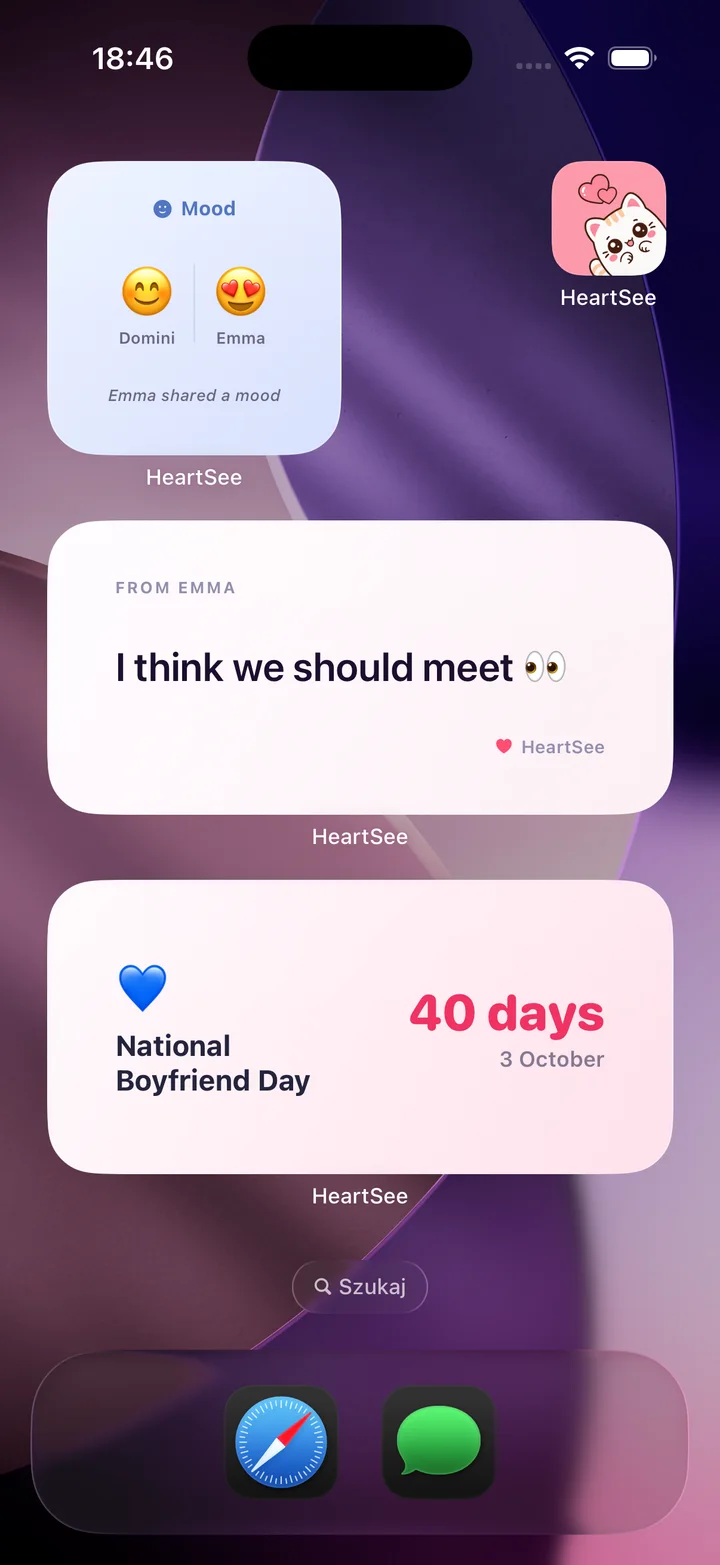
Some couples move these signals out of the chat and onto the Home Screen. HeartSee's App Store listing says you can send a mood, a note, or a doodle straight to your partner's Home Screen, and version 1.10.6 notifies your partner when you do. The same version added a shared streak that grows when you both answer each day, with a free freeze for one missed day, which suits the first week when routines are still unsettled. Other apps do similar things in different ways; the comparison below lists them by the job they do.
Related reading: Love note and doodle widgets for couples on iPhone: 9 apps · Apps that help long-distance couples between visits: 10 compared
When is it more than post-visit blues?
Sadness after a goodbye is expected, and the NHS notes that a low mood often gets better after a few days or weeks. Its advice is to see a GP (a family doctor) if you have had a low mood for more than 2 weeks, if you are struggling to cope, or if the things you are trying yourself are not helping. The same applies if the low mood keeps coming back between visits or starts to affect your sleep, eating, work, or studies.
If you ever think about harming yourself, contact emergency services or a crisis line in your country straight away.
Frequently asked questions
How long do post-visit blues last?
There is no set length. For many couples the first day or two apart feel the hardest, and it eases as normal routine returns. The NHS advises seeing a GP if a low mood lasts more than 2 weeks or you are struggling to cope.
Is it normal to cry after leaving your long-distance partner?
Yes. Going from being together all day to messages and calls is a big change, and sadness at that moment is a common reaction. It does not mean something is wrong with the relationship.
Should we call right after a long-distance visit ends?
Send a message when the traveller arrives and keep the first call short. A long call late on the travel day, when you are both tired, often turns into replaying the goodbye. Go back to your usual call schedule from day 2.
How do I stop feeling empty after a long-distance visit?
Give the first days a simple structure: one normal activity at your usual time, one small shared ritual such as a morning note or a photo of your day, time with a friend, and a confirmed date for the next visit.
Does feeling sad after every visit mean the relationship isn't working?
Not by itself. Missing someone after time together is expected. If every goodbye leaves you doubting the relationship, talk about it after a few days, when you are both calmer, and include a plan for when the distance might end.
Sources and product information
Product and platform details were checked against these official pages. Store availability, pricing, and iOS behavior may change.