How to Make a Long-Distance Relationship Work Across Time Zones
Build a sustainable long-distance relationship across time zones with fair call windows, asynchronous affection, clear expectations, and visit planning.
Stop searching for a perfect schedule
A long-distance relationship across different time zones rarely has one call time that feels equally convenient every day. One person is waking while the other is working; one is ready to talk while the other is exhausted. The goal is not perfect symmetry. It is a fair system that both people can understand and revise.
Build the relationship from two layers: dependable live windows and low-pressure asynchronous contact. Live calls hold conversations that need immediate back-and-forth. Notes, moods, drawings, photos, and recorded messages keep ordinary presence moving between those calls.
Map the overlap in local time for both people
Write each person's wake time, work or class blocks, commute, meals, and realistic bedtime in local time. Then convert the usable windows and label them in both zones. Include the day of the week, because a Friday evening in one place may already be Saturday morning in the other.
Do this again when daylight-saving time changes. Not every country changes clocks, and those that do may change on different dates. Calendar invitations with time-zone support are safer than remembering a fixed offset all year.
- Label every plan with both local times.
- Check the calendar after seasonal clock changes.
- Protect sleep before trying to maximize calls.
Rotate who gets the inconvenient call
If somebody always wakes early or stays up late, the schedule will eventually feel like a statement about whose life matters more. Rotate the inconvenience where possible. When work or health makes rotation impossible, balance effort another way, such as planning the date or taking responsibility for the next check-in.
Fairness is not identical minutes. It is a pattern both people can explain and consent to. Revisit the arrangement when jobs, classes, family responsibilities, or health needs change.
Create three kinds of connection window
A sustainable rhythm usually needs more than one call format. Keep a short reliable touchpoint, a flexible longer conversation, and an emergency path for genuinely important situations. This reduces the pressure to fit every kind of connection into one nightly call.
For example, share a five-minute morning or bedtime hello several times a week, protect one longer weekend date, and agree how to signal that something cannot wait. The emergency path should remain rare enough to mean what it says.
- Micro check-in: five minutes and easy to keep.
- Quality-time call: long enough for an activity or deeper topic.
- Urgent contact: a clearly agreed signal, not repeated calls for routine reassurance.
Use asynchronous affection for the hours between
Asynchronous affection means sending something loving without expecting an immediate response. A photo of breakfast, a short video, a mood, or a hand-drawn note can wait until the partner wakes. This creates continuity without keeping either person tied to a phone.
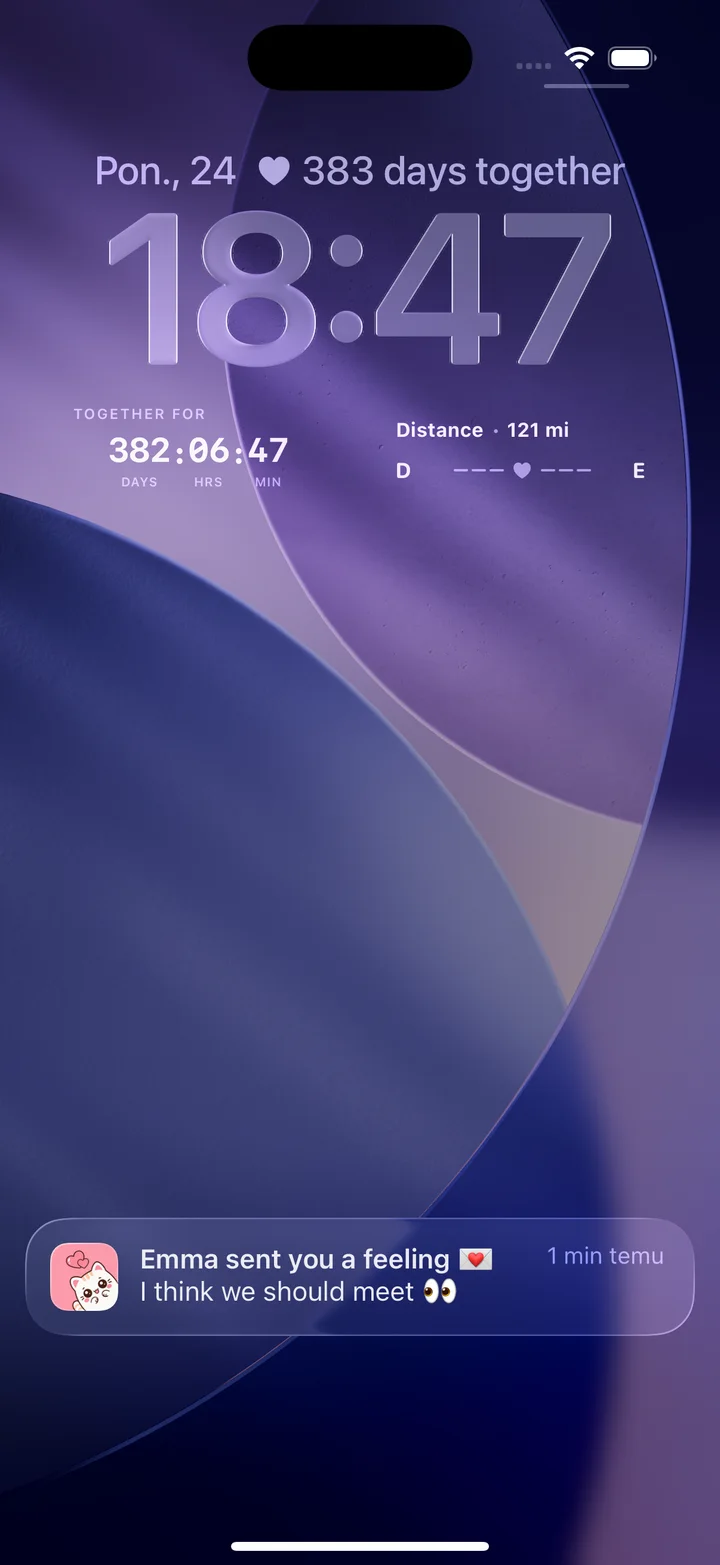
HeartSee is built around these small signals on iPhone. A mood or drawing can be sent to the shared space, while widgets keep selected relationship information visible. The receiver can notice it in their own day rather than being pulled into the sender's schedule.
Set response expectations before silence becomes a story
Across time zones, a normal gap can feel personal. Agree on what a routine response delay looks like during work, sleep, or social plans. Use a simple phrase for “I saw this and care, but I cannot answer properly yet.” Clear context prevents imagination from filling the gap with rejection.
Do not promise permanent availability. Both people need local friends, focused work, rest, and time away from the phone. Independence is not a threat to connection; it gives each partner a life worth bringing back to the relationship.
Plan dates that survive tiredness and bad internet
A remote date should match the energy available at that hour. If one person is just waking and the other is near sleep, choose breakfast together, a short question game, or quiet parallel time. Save complex films or emotionally heavy conversations for a window when both brains are present.
Keep a backup that works if the connection drops: answer the same HeartSee question separately, exchange drawings, listen to a shared playlist, or send recorded messages. A failed video call does not need to become a failed date.
Keep the next visit concrete and time-zone proof
Travel itineraries are vulnerable to date confusion. Record departure and arrival in the local time of each airport, include the date, and share the actual itinerary. Confirm who is meeting whom and when before relying on a countdown.
Once the plan is real, make it visible. A shared calendar or HeartSee countdown can turn the wait into something finite. Leave recovery time for jet lag and avoid packing every day with activities simply because the visit is rare.
Have a plan for hard days in each location
A distant partner can listen and care, but cannot always provide immediate physical help. Each person should keep local friends, family, neighbors, and appropriate professional resources in the picture. Share the names of trusted contacts only with their consent and decide what situations justify reaching out.
For ordinary difficult days, ask what support means: a call, a gentle message, practical brainstorming, or quiet time. A HeartSee mood can signal context, but it should never replace urgent local support or emergency services.
Review the system once a month
Schedules drift. A rhythm that worked during one semester, project, or season may stop working without either partner doing anything wrong. Once a month, ask whether the pattern supports sleep, work, local life, and enough meaningful connection.
Change one element at a time: move the long call, reduce routine messages, add a five-minute check-in, or rotate an inconvenient slot. A sustainable long-distance relationship is not a schedule you discover once. It is a shared system you keep adjusting.
Frequently asked questions
How often should long-distance couples in different time zones talk?
There is no universal number. Choose a dependable rhythm both people can sustain, such as short check-ins during the week and one longer call, then adjust it around real schedules.
How do couples handle a 12-hour time difference?
Use mornings and evenings as overlap, rotate inconvenience, label plans in both local times, and rely on asynchronous notes, photos, moods, drawings, or recorded video between live calls.
What apps help couples in different time zones?
Shared calendars help scheduling, asynchronous video preserves voice and expression, and HeartSee helps iPhone couples share widgets, moods, notes, drawings, games, distance, and memories.
Can different time zones ruin a relationship?
Time zones create fatigue and coordination problems, but do not determine the outcome. Clear expectations, fair scheduling, independent local lives, future planning, and reliable repair matter more than the offset.