What to Do With Your Long-Distance Boyfriend or Girlfriend
Need ideas for a long-distance date night? Try low-pressure things to do together, couples widgets, and games that make distance feel less repetitive.
What can I do with my long-distance boyfriend or girlfriend?
The best long-distance activities make room for ordinary life as well as special date nights. Pick something that matches the energy you both have: a shared meal on video, a game with a few easy questions, a film, parallel time while you each do your own task, or a small plan for your next visit.
You do not need to make every call memorable. A relationship usually feels closer when it has a few repeatable rituals and enough room for spontaneous conversation. Start with one idea, then notice whether it makes both of you want to do it again.
- Have breakfast, dinner, or a late snack together on video.
- Watch the same film, episode, or live event and keep a call open.
- Take a short walk together and show each other the local view.
- Cook the same simple recipe, then compare the result.
- Set aside quiet parallel time for reading, studying, or errands.
Choose an activity for the kind of time you have
A two-hour date and a ten-minute check-in need different plans. When one person is tired or schedules barely overlap, choose something with a gentle ending point. A complicated activity can wait for the weekend; a quick game, photo, note, or voice message can carry a busy weekday.
If you have a longer window, use it for something that creates a shared memory. Make a small travel wish list, trade stories from childhood, plan an imaginary one-hour date in either city, or revisit photos from a previous visit. The activity is only a starting point. The conversation around it is usually the part you keep.
Related reading: How to make a long-distance relationship work across time zones · 25 long-distance relationship questions for deeper conversations
Best couples widgets: choose one glance that matters
The best couples widget is not the one that puts the most information on your phone. It shows one small thing you genuinely want to notice: a partner's mood, a note, days together, distance, or a countdown to the next visit. A clear, personal glance is more useful than a crowded mini-dashboard.
HeartSee offers Home Screen and Lock Screen widgets for paired iPhones. Each person should decide what feels comfortable to show in public, especially on a Lock Screen. iOS may delay widget refreshes, so use widgets as gentle snapshots rather than a promise of live status.
A widget works best alongside direct communication, not instead of it. A mood can offer context. A countdown can make a confirmed visit feel closer. Neither can replace asking how your partner is doing when they need a real conversation.
Related reading: Best couples apps for iPhone: 9 ways to stay connected · Long-distance relationship apps: which features actually help?
Games for distance couples that start a real conversation
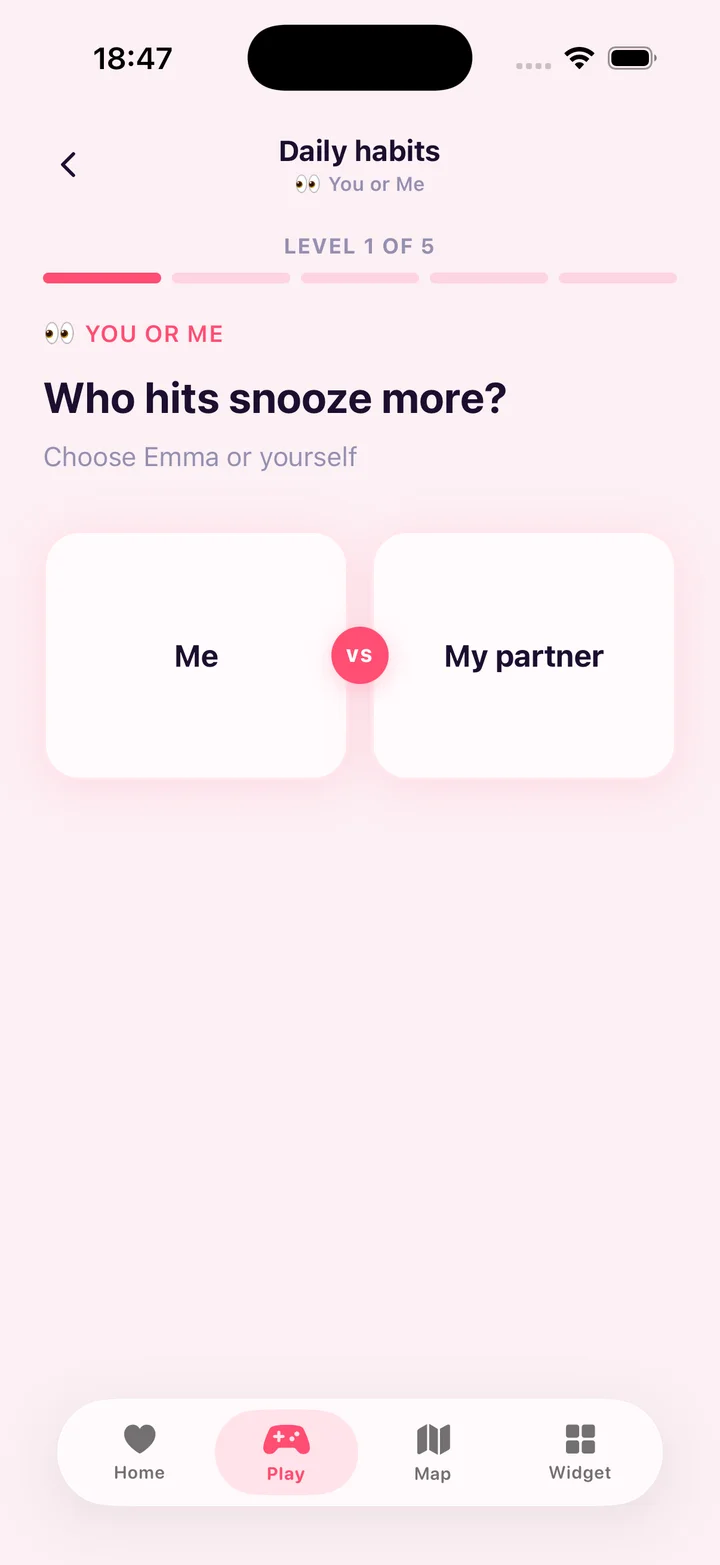
Games for long-distance couples work when they remove the pressure to invent a topic. Try You or Me, This or That, two truths and a lie, a shared playlist challenge, a photo scavenger hunt, or a quick round of guessing each other's answers. The goal is not to keep score. It is to uncover a story, preference, or joke you did not already know.
HeartSee includes quick couples games for paired iPhone users, including playful question formats that fit into a short call. Keep the tone curious. If an answer surprises you, ask about it rather than treating it as a test of how well you know each other.
For more thoughtful conversation, take turns choosing one question before a regular call. A small ritual is easier to keep than a long list, and it gives both people time to arrive with an answer instead of searching for one on the spot.
Related reading: 25 long-distance relationship questions for deeper conversations · 7 best apps for long-distance couples in 2026
Make distance activities feel good, not like homework
A ritual should make connection easier, not become another obligation. Agree on a simple expectation: it is fine to postpone a game, skip a video date after a difficult day, or reply later to an asynchronous note. Missing an activity says little about the relationship by itself.
Try one weekly activity and one small everyday signal for a month. For example, use a widget or note during the week, then play a game or plan a date on Sunday. Keep the parts that feel warm and remove the parts that create guilt, pressure, or unnecessary monitoring.
Plan the next thing while you are still enjoying this one
End a good call with a small concrete plan: the next episode, a recipe to try, a question for later, or a time to talk again. This does not need to be a rigid schedule. It gives both people a shared point on the horizon and reduces the awkwardness of deciding what to do every time you connect.
When the next visit is confirmed, make the date visible and keep practical details in a shared calendar. If the visit is still uncertain, talk honestly about what needs to happen before it can be planned. A clear conversation is kinder than a countdown built around a hope.
Frequently asked questions
What can I do with my long-distance boyfriend or girlfriend over the phone?
Eat a meal together, watch something at the same time, play a short question game, take a walk on video, cook the same recipe, or spend quiet parallel time while you each do your own task.
What are the best couples widgets?
The most useful widget shows one meaningful signal, such as a mood, private note, days together, distance, or a confirmed next-visit countdown. HeartSee offers Home Screen and Lock Screen widgets for paired iPhones.
What games can long-distance couples play?
Try You or Me, This or That, two truths and a lie, a shared playlist challenge, photo scavenger hunts, or questions you answer separately before comparing. Choose games that create stories instead of pressure to win.
How do I make long-distance calls less boring?
Match the activity to your available time, rotate who chooses it, and keep one or two repeatable rituals. A short game or shared activity gives the conversation a starting point without turning every call into a planned event.