Long-Distance Relationship Apps: Which Features Actually Help?
Learn which long-distance relationship app features create sustainable closeness, from asynchronous signals and games to distance, privacy, and memories.
Useful technology recreates background closeness
What long-distance couples often miss is not another messaging channel. It is the ordinary awareness that comes from sharing space: knowing the other person had a hard morning, seeing a note on the table, or laughing at a small habit. The most useful long-distance relationship apps recreate pieces of that background closeness without demanding constant attention.
Evaluate features by the behavior they support. Does the tool make affection easier to express, schedules easier to understand, or memories easier to keep? Does it respect boundaries? If a feature adds pressure, checking, or guilt, more engagement is not automatically better.
Asynchronous signals help when schedules do not overlap
Moods, notes, photos, drawings, and recorded messages let one person share now and the other receive later. They are ideal across time zones or during work and study because connection does not depend on a simultaneous free hour.
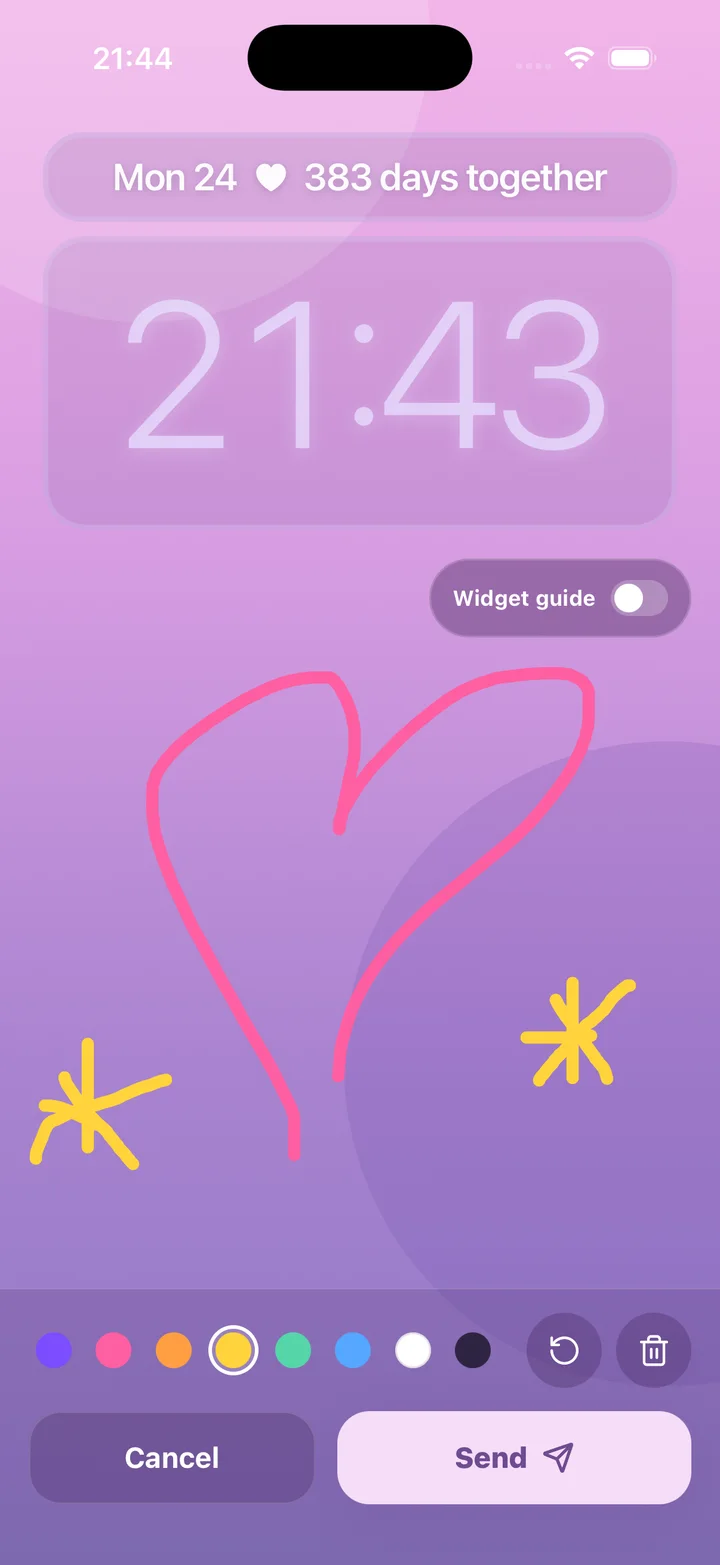
HeartSee uses moods, notes, and drawings as small private signals between two paired iPhones. Their strength is low effort. A signal can say “I am thinking of you” without creating an obligation to open a long conversation immediately.
- Make replies optional, not expected on a timer.
- Choose one signal that both partners understand.
- Call when nuance or immediate support matters.
Widgets create presence only when the glance stays meaningful
A couple widget earns its screen space by showing one thing you genuinely want to notice: a mood, note, days together, distance, or countdown. If it tries to display everything, it can become decoration that disappears into the background.
HeartSee provides Home and Lock Screen widgets for relationship signals. Remember that iOS schedules widget updates and may delay refreshes based on system conditions. A widget is a gentle view, not a guaranteed real-time tracking panel.
Distance is helpful as context, risky as evidence
Seeing the distance between two partners can create a shared sense of place and make a future reunion tangible. The same feature becomes harmful when it is treated as proof of where someone should be or used to demand explanations.
Good implementation begins with permission and clear limits. HeartSee shows distance only with the relevant permissions chosen by both partners. Agree on why you want the feature, what it means, and how either person can turn it off without conflict.
Conversation prompts work when they open a door
Long-distance calls can become status meetings: work, dinner, sleep, repeat. A game or question introduces novelty and invites stories. Quick choices work on tired evenings; deeper prompts can support a planned check-in about expectations or the future.
HeartSee includes games such as You or Me and other short couple questions. Treat answers as discovery rather than scoring. The point is not to prove who knows the relationship best but to give both people fresh material.
Streaks can support a ritual—or quietly create pressure
A streak makes repetition visible and can celebrate a tiny effort both people chose to make. It is helpful when the underlying action is meaningful and small: one mood, note, question, or check-in.
It stops helping when a missed day becomes evidence that someone cares less. HeartSee includes streaks and relationship XP, but numbers cannot see illness, travel, deadlines, or emotional capacity. Repair the ritual after a missed day; do not prosecute the number.
Countdowns help when the plan is real
A next-visit countdown turns an abstract wait into a finite sequence of days. It supports anticipation and makes it easier to share planning milestones. But a hopeful date is not the same as a confirmed one.
Discuss budget, transport, work approval, time zones, and backup plans first. Once both people agree, keep the date in a calendar or widget. If plans change, update it together rather than letting a stale countdown create disappointment.
Privacy controls are a core relationship feature
Couples apps may handle intimate answers, photos, dates, notifications, or location permissions. Read the current privacy policy, protect phone access, review what appears on the Lock Screen, and understand how pairing and disconnection work.
The healthiest default is permission-first. Share only what supports the relationship and revisit the choice when circumstances change. Trust grows through agreement and behavior, not through maximum access to another person's device.
Build a two-feature routine before adding more
Choose one feature for everyday presence and one for intentional time. For example, share moods during the week and play a short game on Sunday. Or use drawings asynchronously and keep the next visit visible. This is more sustainable than enabling every notification and maintaining five new rituals.
After seven ordinary days, ask: Did this help us feel closer? Did either person feel watched or obligated? Was it easy to understand? Keep what worked and remove what did not. The best app becomes a quiet support rather than the center of the relationship.
Frequently asked questions
What features should a long-distance relationship app have?
Useful features include asynchronous notes or moods, couple widgets, prompts, a next-visit countdown, consensual distance sharing, games, and a private memory space. You may only need two or three.
Is location sharing healthy in a long-distance relationship?
It can be comfortable when voluntary, limited, and used for connection or safety. It is unhealthy when used to monitor, test, or pressure a partner.
Do relationship streaks help couples?
They can make a chosen ritual fun and visible. They should never be treated as a measure of love or used as evidence during conflict.
Why use a couples app instead of regular messaging?
A couples app can separate widgets, games, distance, and memories from a busy chat history. Regular messaging remains better for urgent or detailed conversations.